
Metal Sealant Reviews: Best Picks for Roofs & Seams
by Editorial Team
Table of Contents
- Metal Sealant Comparison: Which Formula Fits Your Job?
- Geocel 2300 Roof Tripolymer Sealant: The All-Round Metal Roof Sealant
- Geocel 2320 Semi-Self-Leveling: Best Sealant for Metal Roof Seams
- Geocel RP-400 Roof Cement: Metal Roof Leak Repair Sealant for Wet Surfaces
- Silicone Sealant for Metal: Where It Works and Where It Fails
- How to Choose a Metal Sealant by Substrate and Chemistry
- Verdict: Picking the Right Metal Sealant for Your Crew
- Frequently Asked Questions
Last Updated: October 8, 2026
Metal Sealant Comparison: Which Formula Fits Your Job?
Choosing a metal sealant comes down to matching chemistry to substrate, joint width, and moisture conditions. Get that match right and the seal lasts for years; get it wrong and you are back on the roof within a season. At ShopGeocel, we build sealants for specific substrates rather than one-size-fits-all jobs, and this comparison covers our three core formulas plus where generic silicone falls short.
Metal sealant is a flexible, weather-resistant compound formulated to bond metal panels, seams, flashing, and fasteners while absorbing the movement that metal undergoes as it heats and cools. The three formulas below cover roofing, gutters, and wet-surface leak repair, and each one is priced for professional crews working to a margin.
Quick Spec Table: Chemistry, Cure, and Cost
| Product | Chemistry | Best For | Cure Type | Price |
|---|---|---|---|---|
| Geocel 2300 | Solvent-based tripolymer | Roofing, flashing, solar mounts | Moisture cure | $9.25 |
| Geocel 2320 | Solvent-based tripolymer, semi-self-leveling | Gutters, narrow seams, lap joints | Moisture cure | $11.99 |
| Geocel RP-400 | Asphalt-based cement, asbestos-free | Wet and underwater leak repair | Solvent release | $4.62 |
Geocel 2300 Roof Tripolymer Sealant: The All-Round Metal Roof Sealant
Our pick for most metal roofing work is Geocel 2300. It is the one cartridge we would hand a crew heading out to flashing, trim, and solar mounts, because it bonds to damp, oily, or even frozen surfaces that stop other caulks cold.


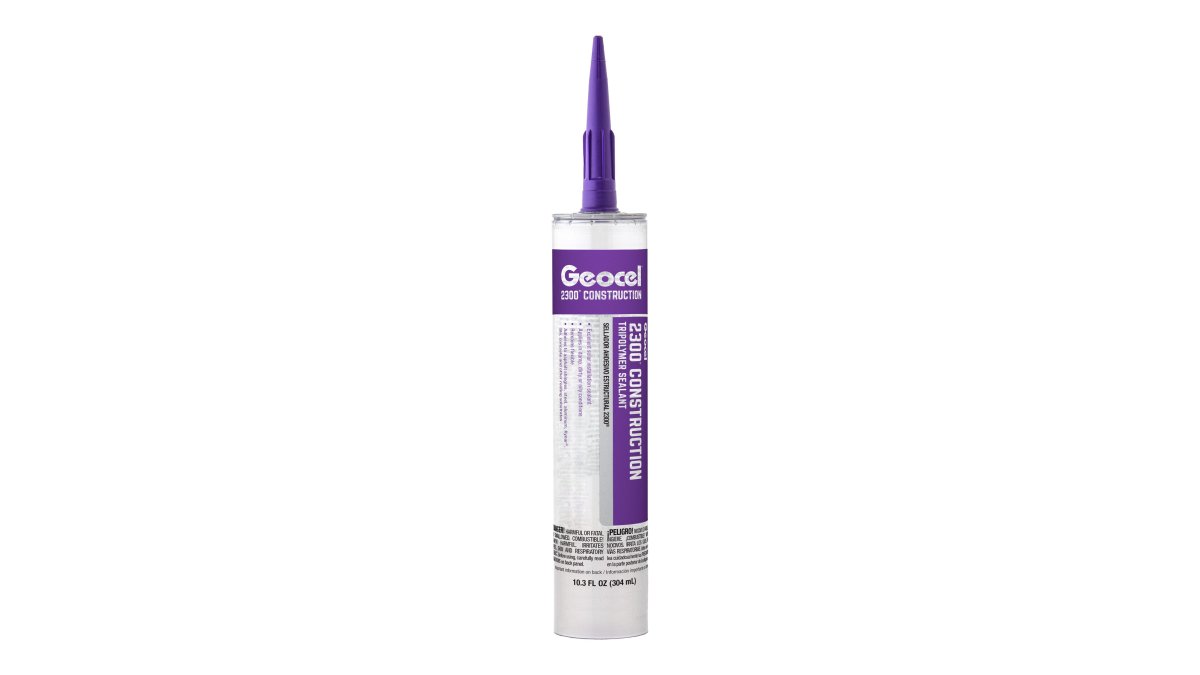
The tripolymer chemistry stays permanently flexible, so it moves with the roof through thermal cycling instead of cracking out. It is paintable and resists UV and mildew, which matters on coated metal where color matching and fade resistance come up on every job.
It exceeds ASTM C-920 requirements and comes in a 10.3 oz cartridge, sold individually or by the case of 24 for larger runs. For solar installers, that combination of damp-surface adhesion and long-term flexibility is exactly what mounting and weatherproofing call for.
Geocel 2320 Semi-Self-Leveling: Best Sealant for Metal Roof Seams
For metal roof seams and gutter runs, the semi-self-leveling Geocel 2320 does the work your wrist would otherwise do. It flows into the joint and settles flat without tooling, which saves time on long, narrow runs where a bead of standard caulk would need smoothing.
It is built for joints up to 1/4" wide, and it adheres to damp and oily surfaces including gutter metals. That flexibility matters because gutters expand and contract along their full length, and a sealant that hardens will tear at the seam.
One caveat worth knowing before you order: 2320 is not available in California. If your crews work there, plan around the 2300 for those jobs. For everyone else, this is the fastest way to finish a seam cleanly.
Geocel RP-400 Roof Cement: Metal Roof Leak Repair Sealant for Wet Surfaces
When a leak is active and you cannot wait for a dry day, RP-400 is the tool for the job. This asphalt-based, asbestos-free cement applies to wet or dry roof surfaces, even underwater, and seals quickly without pulling apart or losing its bond.
That underwater capability is not marketing language. It is the reason this product exists: commercial pool decks, ponding water, and submerged repairs that a standard sealant cannot touch.
Two limitations to respect. RP-400 is not for single-ply membranes like EPDM or PVC, and it should not be painted or thinned. It comes in a black 10 oz cartridge, sold individually or by the case of 24.
Silicone Sealant for Metal: Where It Works and Where It Fails
Silicone sealant for metal works fine on clean, dry, non-porous surfaces in low-movement joints. It fails everywhere else, and metal roofing is mostly everywhere else.
The problem is adhesion. Silicone does not bond reliably to damp, oily, or weathered metal without primer, and metal roofs are rarely pristine when a crew arrives. It also cannot handle the thermal movement of long panel runs the way a permanently flexible tripolymer can, so seams crack and water finds the gap.
Geocel 2300® Roof Tripolymer Sealant →
Where silicone earns its place: interior trim, stationary joints, and dry, prepared surfaces. Where it does not: roof seams, gutters, flashing, and anything exposed to standing water. If your crews have been using hardware-store silicone for years, the switch is not about spending more.
How to Choose a Metal Sealant by Substrate and Chemistry
Most ranking pages tell you to "match the sealant to the job" and stop there. That is not a decision. Below is the actual decision logic, substrate first, then joint geometry, then moisture condition, plus the compatibility traps that cause callbacks even when the chemistry is right.
Step 1: Identify the Substrate
| Substrate | Works Well | Avoid | Why |
|---|---|---|---|
| Galvanized steel | Solvent-based tripolymer, neutral-cure silicone | Acid-cure (acetoxy) silicone | Acetoxy silicone releases acetic acid as it cures, which attacks the zinc coating and can leave a chalky, poorly bonded joint |
| Bare or painted aluminum | Solvent-based tripolymer, urethane | Ammonia-containing cleaners left on the surface | Aluminum oxide forms within minutes of cleaning; sealant applied over an unremoved oxide layer bonds to the oxide, not the metal |
| Copper and copper alloys | Neutral-cure silicone, urethane | Solvent-based products on unfinished copper | Solvent carriers can leave residue that interferes with the patina and shows through on architectural work |
| Stainless steel | Urethane, neutral-cure silicone | Nothing specific, but adhesion is poor without abrasion | Stainless is deliberately passive; a light abrasion or primer is usually required for a durable bond |
| Asphalt and modified bitumen | Asphalt-based cement | Silicone | Silicone will not bond to asphalt; the joint fails at the interface, not the sealant |
| EPDM and PVC single-ply | Membrane-specific splice or lap sealant | Asphalt-based cement, solvent tripolymer | Solvents in these products can swell or degrade single-ply membranes |
Step 2: Match the Joint Geometry
Joint width and depth drive the choice more than most installers expect. A sealant that skins over before it flows into a narrow lap joint will bridge the gap instead of filling it, and a bridged joint tears on the first thermal cycle.
- Joints up to 1/4" wide: Semi-self-leveling formulas flow in and settle flat without tooling. This is the range where a self-leveling product saves the most labor on long gutter and seam runs.
- Joints 1/4" to 1/2" wide: A standard non-sag bead, tooled once, is the reliable choice. Backer rod is recommended so the sealant bonds to two faces rather than three, three-sided adhesion restricts movement and is a common cause of cohesive tearing.
- Joints wider than 1/2": These are not sealant joints; they are expansion joints. Use a backer rod sized to the joint and a sealant rated for the expected movement, or the joint will fail regardless of chemistry.
Step 3: Read the Moisture Condition
This is where the field reality diverges from the datasheet. Most metal roofing work happens on surfaces that are damp from overnight condensation, oily from handling, or dusty from cutting. A sealant that requires a bone-dry, solvent-wiped surface will fail on a real roof even if it passes a lab test.
- Dry, clean, prepared surface: Nearly any quality sealant works. This is the only condition where hardware-store silicone is a defensible choice.
- Damp or oily surface: Solvent-based tripolymer formulas are formulated to bond here. This is the single biggest practical advantage over silicone on roofing work.
- Standing or ponding water: Asphalt-based cement is the only common option that applies and cures underwater. It is a repair product, not a long-term architectural sealant.
Compatibility Traps That Cause Callbacks
- Existing sealant: Silicone will not bond to cured silicone. If a joint was previously sealed with silicone and has failed, the old material must be fully removed, not just cleaned, before resealing with a different chemistry. Applying tripolymer over silicone residue is a guaranteed re-leak.
- Coatings: Some elastomeric roof coatings and cool-roof paints will not accept a sealant applied over them, and some sealants will not accept a coating applied over them. Check the coating's recoat window and the sealant's paintability before committing to a sequence.
- Dissimilar metals: Where a sealant joint sits between two different metals, galvanic corrosion can occur at the joint if moisture is trapped. This is a design issue, not a sealant issue, but a sealant that traps moisture makes it worse. Use a sealant that cures to a flexible, non-absorbent bead and avoid creating a water trap at the joint.
- Trapped moisture: Sealing over a wet substrate with a product that cures by solvent release can trap the solvent and the moisture together, producing a blister or a soft, uncured bead. If the substrate is wet, use a product designed for wet application.
Quick Decision Path
- Is the surface wet, or is there an active leak? Use asphalt-based cement.
- Is the joint a long, narrow seam or gutter run up to 1/4"? Use a semi-self-leveling tripolymer.
- Is the joint on roofing, flashing, trim, or a solar mount, and is the surface damp or oily? Use a standard non-sag tripolymer.
- Is the joint on clean, dry, low-movement metal trim indoors? Silicone is acceptable.
- Is the substrate EPDM or PVC single-ply? None of the above, use a membrane-specific product.
Verdict: Picking the Right Metal Sealant for Your Crew
The right metal sealant is the one matched to the substrate in front of you, not the cheapest tube on the shelf. Stock all three ShopGeocel formulas and you cover roofing, gutters, and wet-surface repair without a callback. The 2300 handles the bulk of roofing and flashing, the 2320 finishes seams and gutters flat, and the RP-400 stops the leak that will not wait for dry weather.
Every formula is made in Elkhart, Indiana, backed by more than 50 years of sealant manufacturing as a Sherwin-Williams company. That is the difference between a product that works on the day and one that works for the service life of the roof.
Frequently Asked Questions
What is the best sealant for metal?
The best metal sealant depends on the substrate and conditions. For general roofing, flashing, and solar mounts, a solvent-based tripolymer like Geocel 2300 bonds to damp or oily metal and stays flexible. For narrow seams and gutter runs, a semi-self-leveling formula such as Geocel 2320 flows flat without tooling. For wet or underwater repairs, an asphalt-based cement like Geocel RP-400 seals on wet, dry, or submerged surfaces.
Can you use silicone sealant on a metal roof?
Silicone sealant for metal can work on clean, dry, non-porous panels, but it struggles on damp or oily surfaces and often cannot be painted. Solvent-based tripolymer sealants bond to damp and oily metal, resist UV and mildew, and accept paint, which matters on coated steel and aluminum where color matching counts. If a seam is wet or the surface is weathered, pick a tripolymer or asphalt-based formula instead.
How long does metal roof sealant take to cure?
Cure time depends on chemistry, temperature, and joint depth. Solvent-based tripolymer sealants like Geocel 2300 skin over quickly and cure through solvent release, so they set faster in warm, dry conditions. Asphalt-based cements such as Geocel RP-400 seal quickly and stay pliable through temperature swings. Always follow the cartridge label for recoat and full-cure windows before testing the joint.
How do you prepare metal before applying sealant?
Most tripolymer and asphalt-based metal sealants bond without primer, even to damp or oily metal, which is a real advantage on repair jobs. Still, brush off loose rust, dirt, and standing water so the sealant contacts the panel. For best results on weathered or coated metal, wipe the seam clean and apply the bead directly into the joint, then tool only if the formula is non-self-leveling.
Do you need a different sealant for each metal substrate?
Not always, but specialized formulas outperform all-purpose caulk on demanding jobs. Geocel 2300 covers roofing, flashing, trim, gutters, and solar mounts on common metals. Geocel 2320 is built for narrow seams and gutter runs up to 1/4 inch. Geocel RP-400 handles asphalt, steel, brick, wood, and aluminum, but should not be used on single-ply membranes like EPDM or PVC.
Metal roofing does not forgive a sealant that hardens, cracks, or lets go at the seam. ShopGeocel builds formulas for the specific substrate and moisture condition in front of your crew, from permanently flexible tripolymer for roofing and flashing to asphalt-based cement that cures underwater. Shop the lineup and stop treating every leak like a repeat visit.